
Decision A
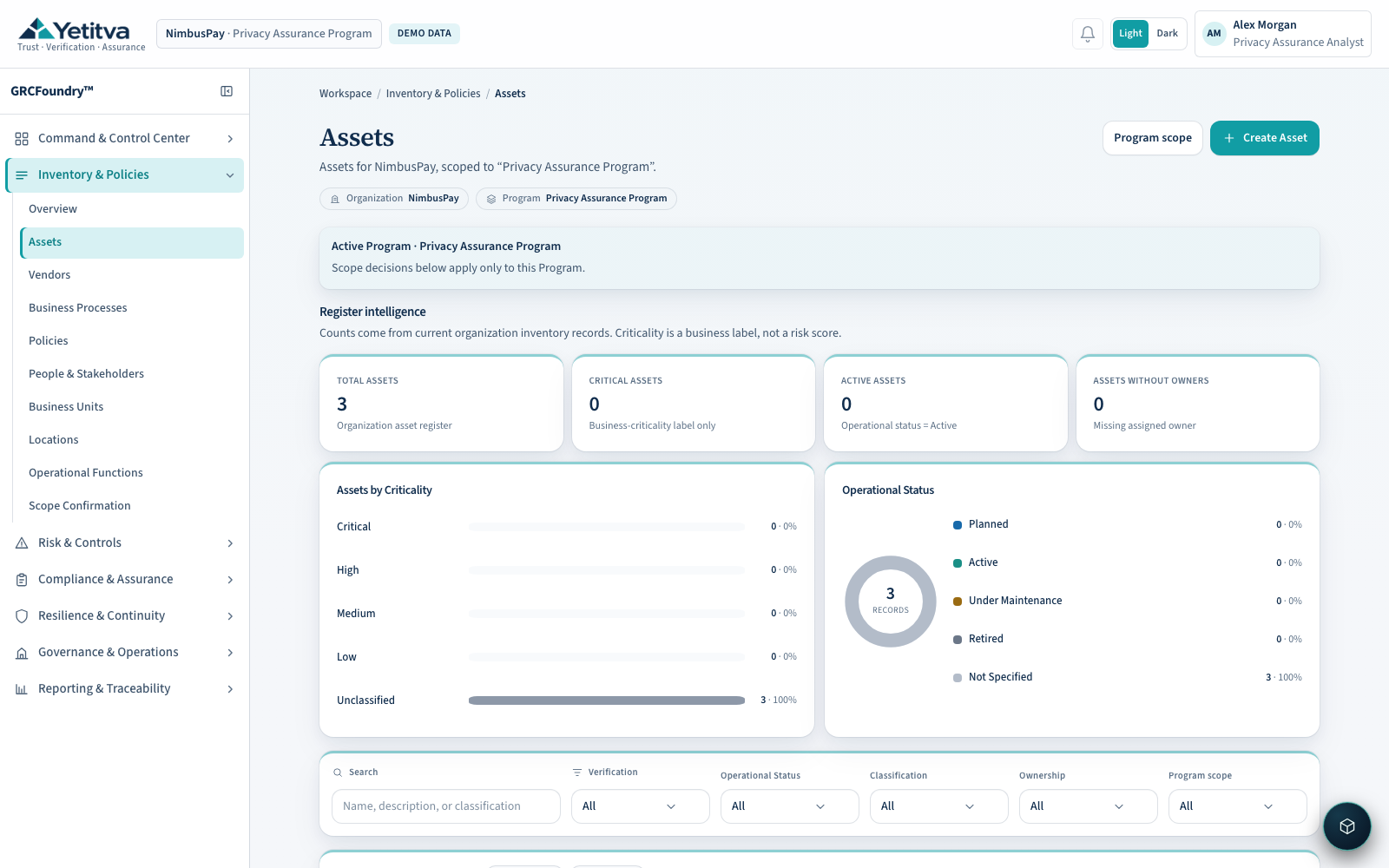
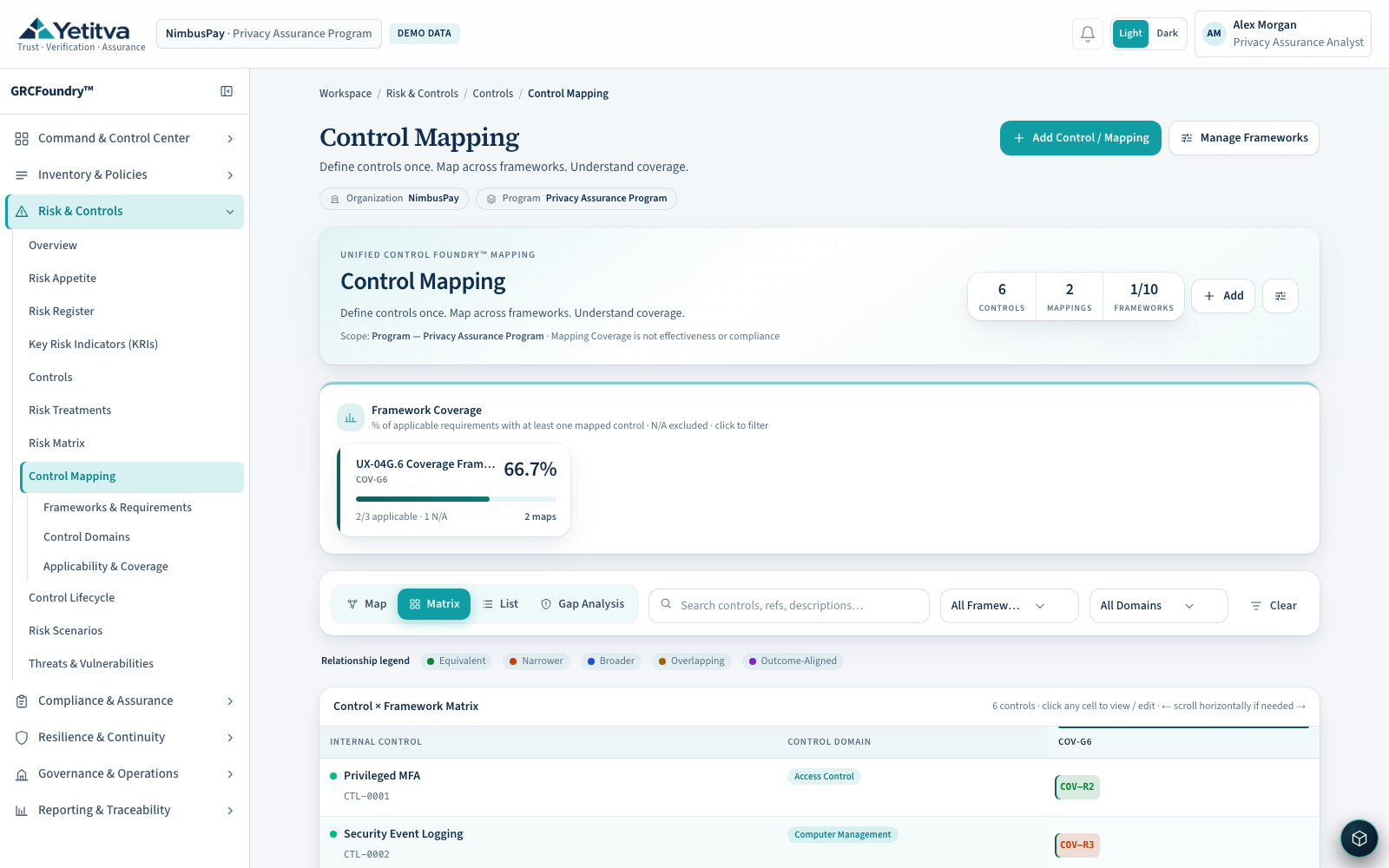
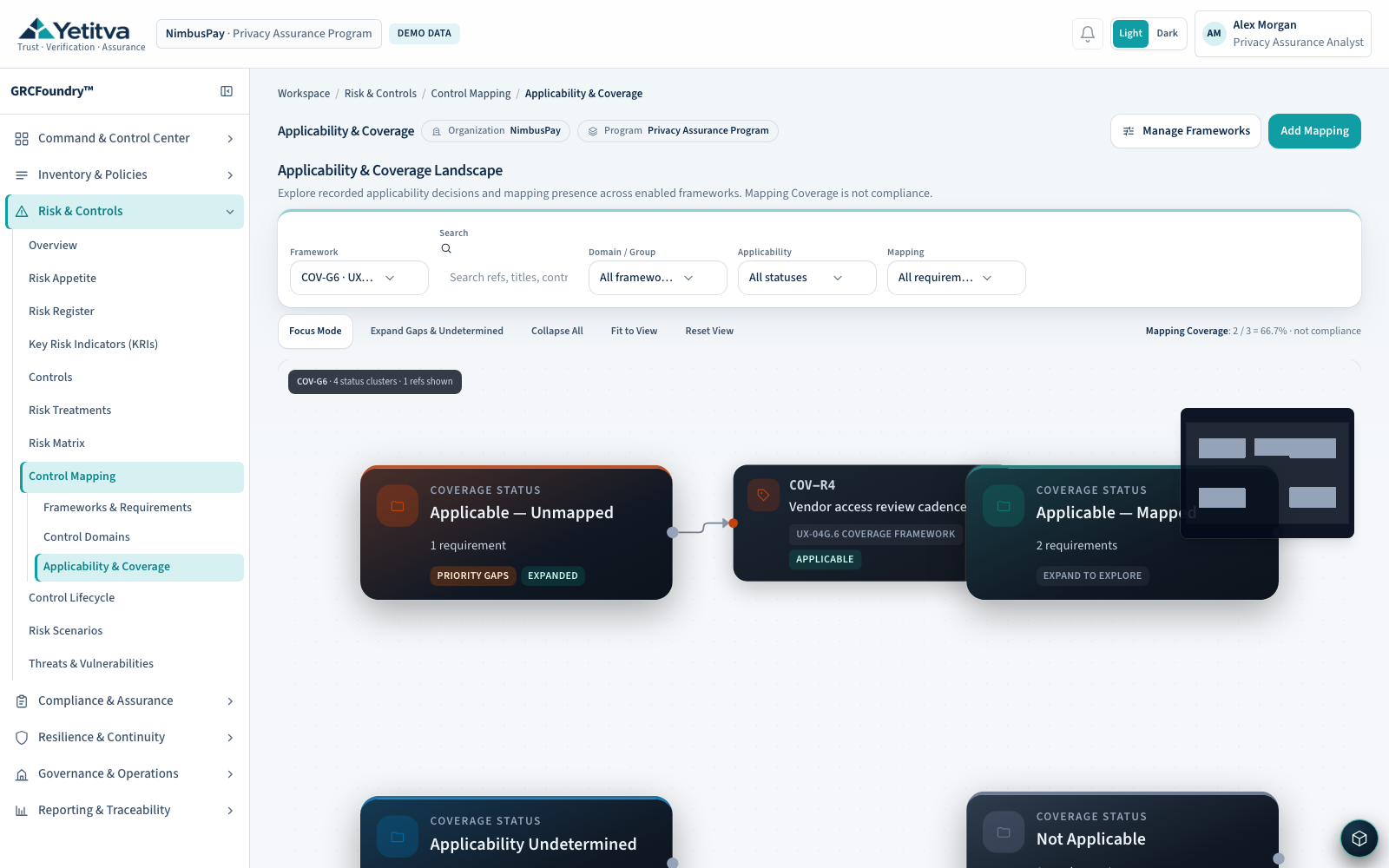
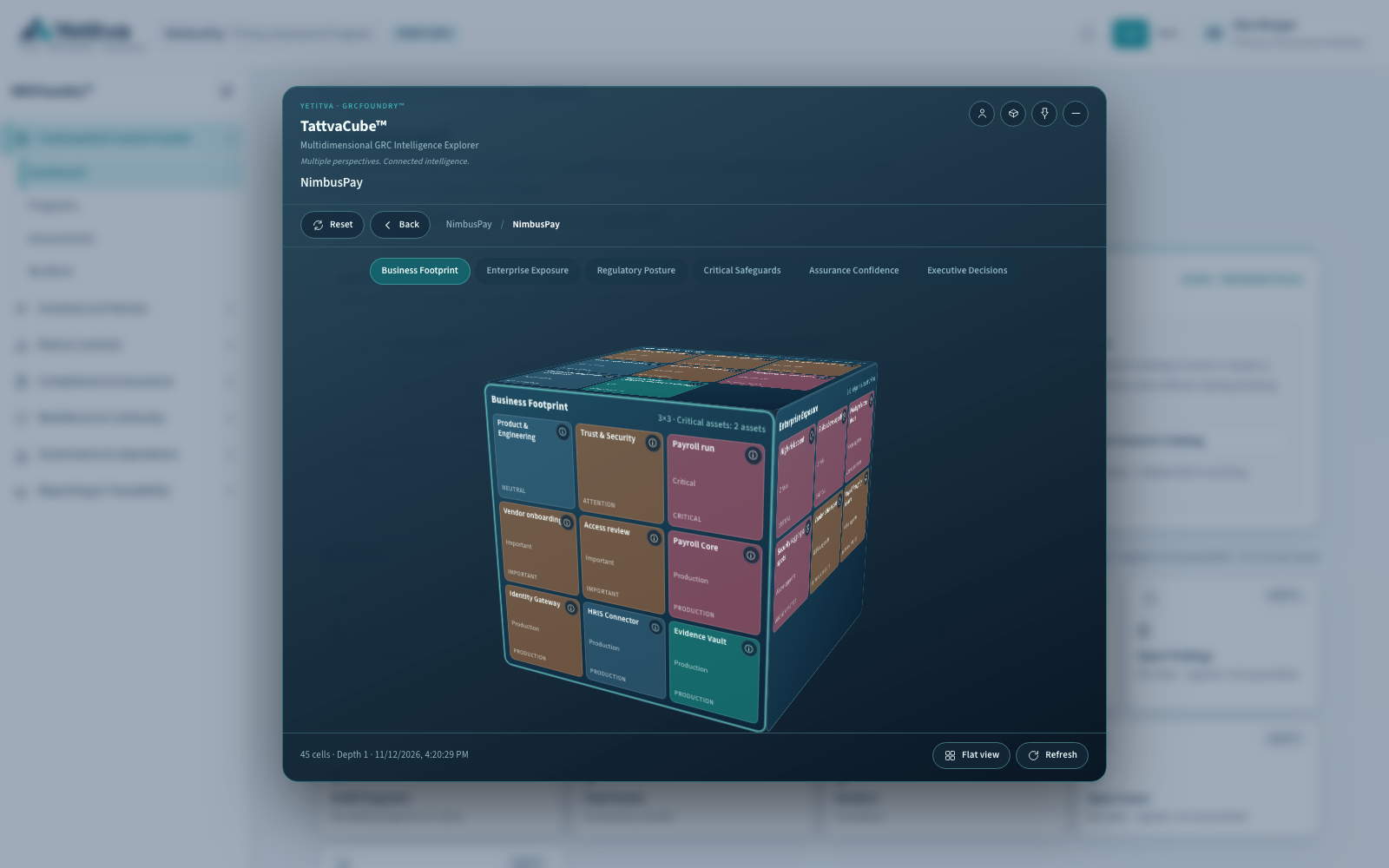
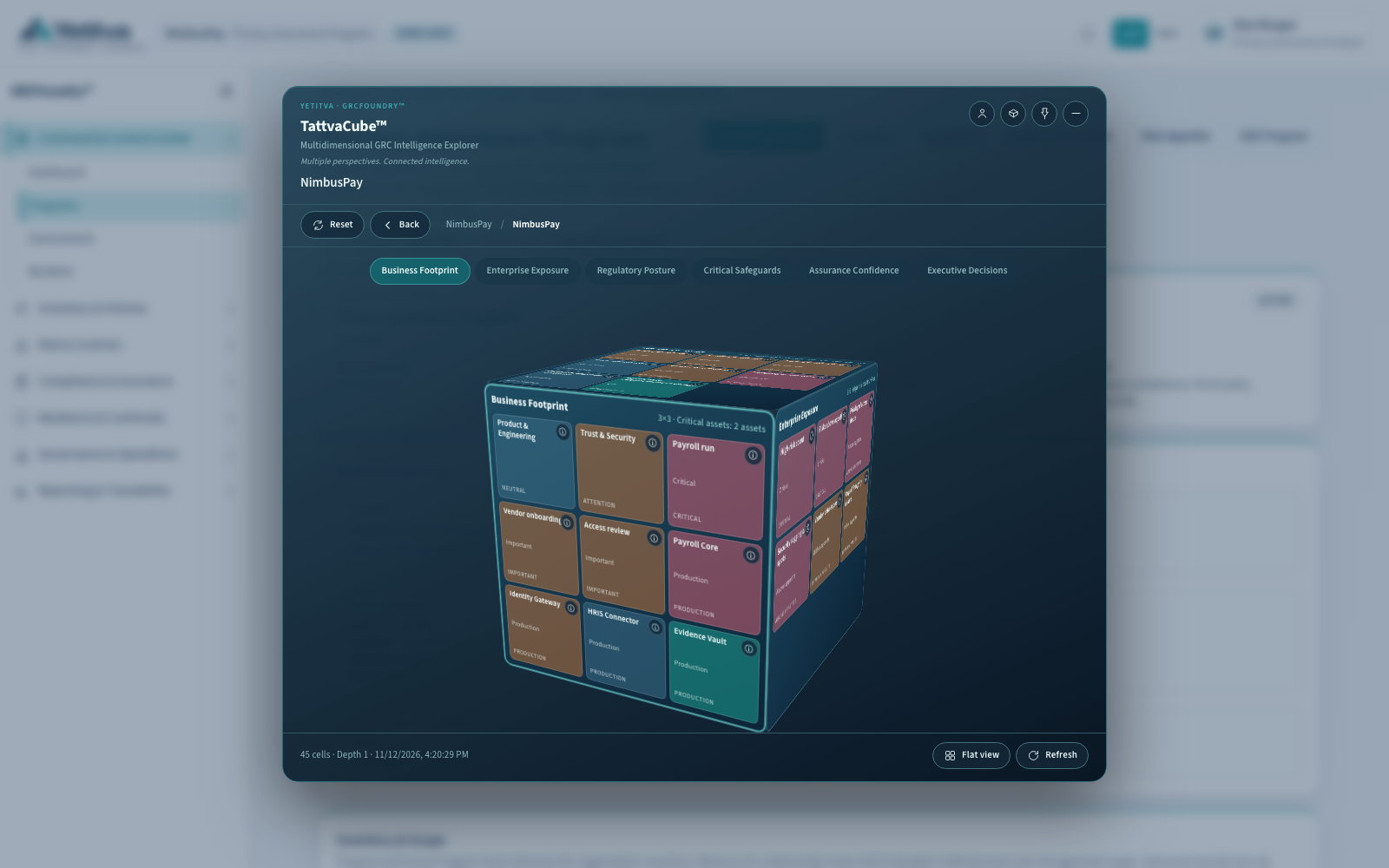
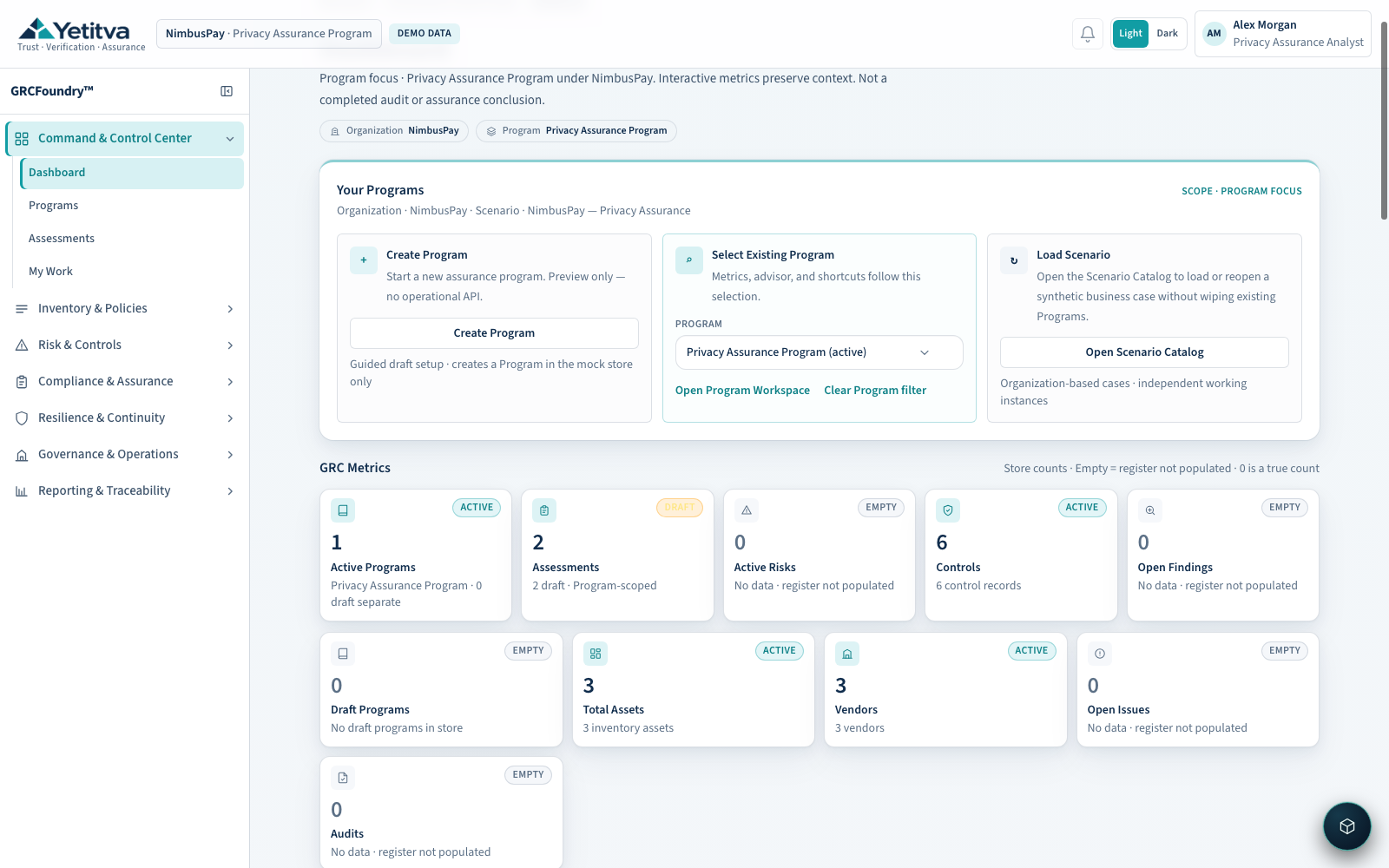
Implemented UIConnected workbench architecture
Demonstrates: information architecture · platform strategy · navigation design
Problem
Governance activities are separated into disconnected tools and workflows, so shared organizational context is hard to reuse and easy to contradict.
Alternatives considered
- Independent point tools per discipline with shared branding only.
- One monolithic dashboard that collapses every concern into a single status surface.
- A modular connected workbench with distinct work areas over shared context.
Choice
An integrated GRCFoundry workbench with seven primary work areas, coherent navigation, and progressive exploration — not a single undifferentiated queue.
Rationale
Disciplines must remain distinct (risk ≠ mapping ≠ assurance ≠ decision) while records and relationships stay understandable across workflows. Architecture is a product strategy choice, not only an engineering preference.
Trade-off
Higher navigation density and data-relationship requirements in exchange for a coherent operator experience and fewer dual-truth decks.
Resulting artifact
Implemented Navigation v1.0 shell with seven parents, Command Center, inventory registers, risk/controls analytics, and Unified Control Foundry Mapping explorers.
Still to validate
Whether target stakeholders can locate ownership and related records faster than with fragmented tools — proposed usability measurement, not yet measured.